
The Burmese Python Invasion in the Everglades
History, Ecological Impact, and Management Response
I. A Landscape Defined by Balance
The Everglades is not simply a swamp. It is a hydrological system — a slow-moving sheet of water that begins in central Florida and spreads southward through sawgrass prairies, cypress domes, marl flats, mangrove estuaries, and hardwood hammocks before reaching Florida Bay.
For centuries, ecological relationships in this system evolved within defined parameters. Rainfall patterns shaped hydroperiods. Fire structured vegetation. Predators and prey coexisted within food webs shaped by time and adaptation.
The Everglades has always changed. But it has historically changed within the boundaries of its evolutionary framework. Over the past three decades, that framework has been disrupted by the establishment of a large, non-native constrictor — the Burmese python (Python bivittatus).
The python did not evolve in this ecosystem. It entered through human pathways. And its presence has introduced a new layer of predation pressure into a landscape already shaped by development, altered water management, and habitat fragmentation.
Understanding the python invasion requires stepping back from headlines and examining history, ecology, and management together.
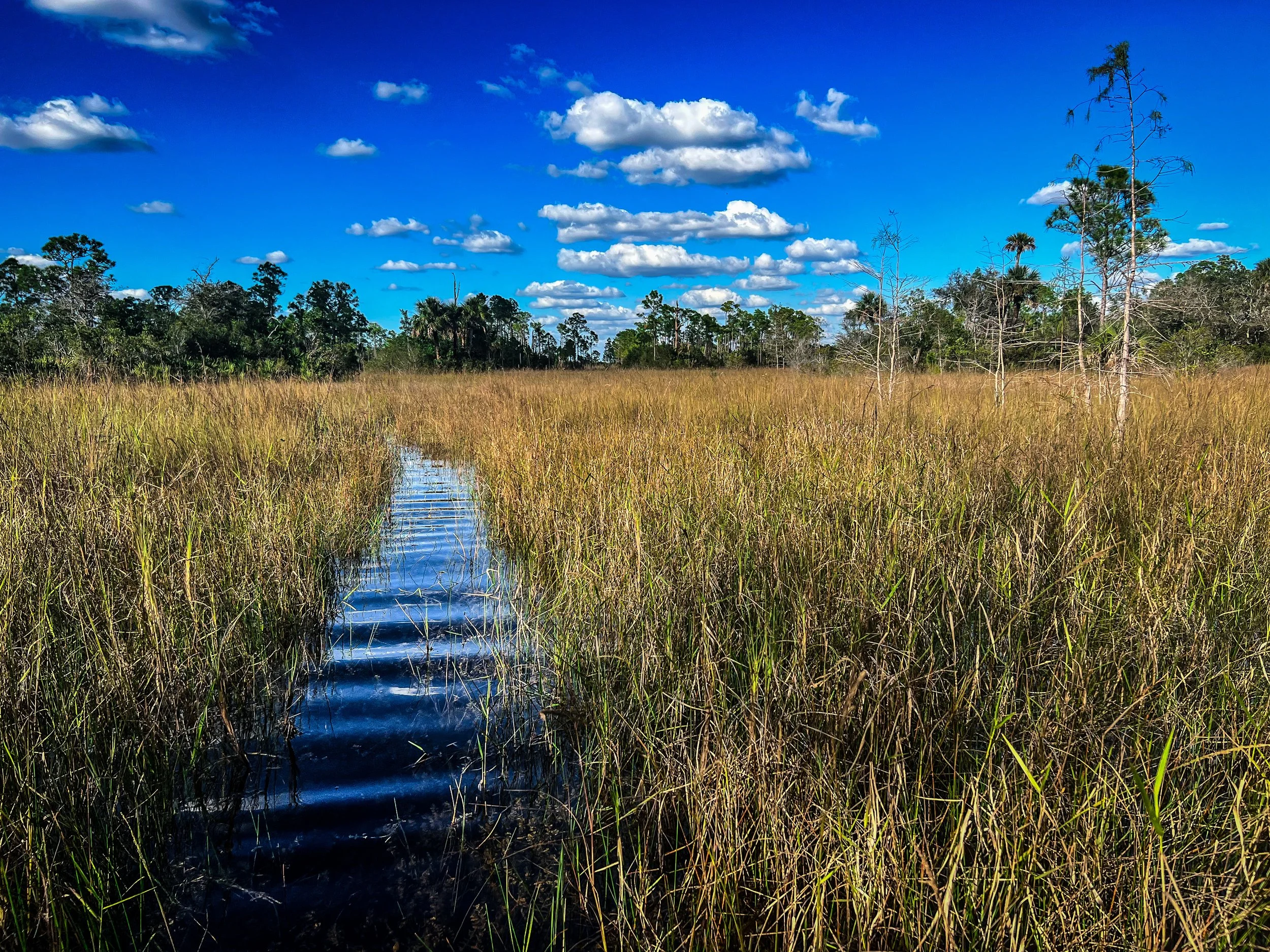
The Everglades is a slow-moving river of grass — shaped by water, fire, and time long before invasive constrictors arrived.
Photo: Cody Meridith
II. Pathways of Introduction and Establishment
The Exotic Pet Trade
During the 1980s and 1990s, Burmese pythons became popular within the exotic reptile trade. Hatchlings were widely available, often marketed as manageable reptiles despite their capacity to grow well beyond twelve feet in length.
South Florida’s subtropical climate proved suitable for survival following accidental or intentional release. (USGS, 2024) While it is difficult to reconstruct every release event, evidence suggests multiple introductions over time rather than a single source population. (Guzy et al., 2023)
Hurricane Andrew and Amplification
Hurricane Andrew in 1992 damaged reptile facilities across South Florida and likely contributed to additional escapes. However, peer-reviewed literature emphasizes that the invasion cannot be attributed to a single storm event. (Guzy et al., 2023)
Establishment occurred through repeated opportunities for survival and reproduction.
Confirmation of Reproduction
By approximately 2000, Burmese pythons were recognized as a reproducing population in South Florida. (Willson et al., 2017) In May 2006, the first documented nest inside Everglades National Park confirmed successful wild reproduction. (UF/IFAS–NPS, 2008)
From that point forward, the population was no longer incidental. It was established.
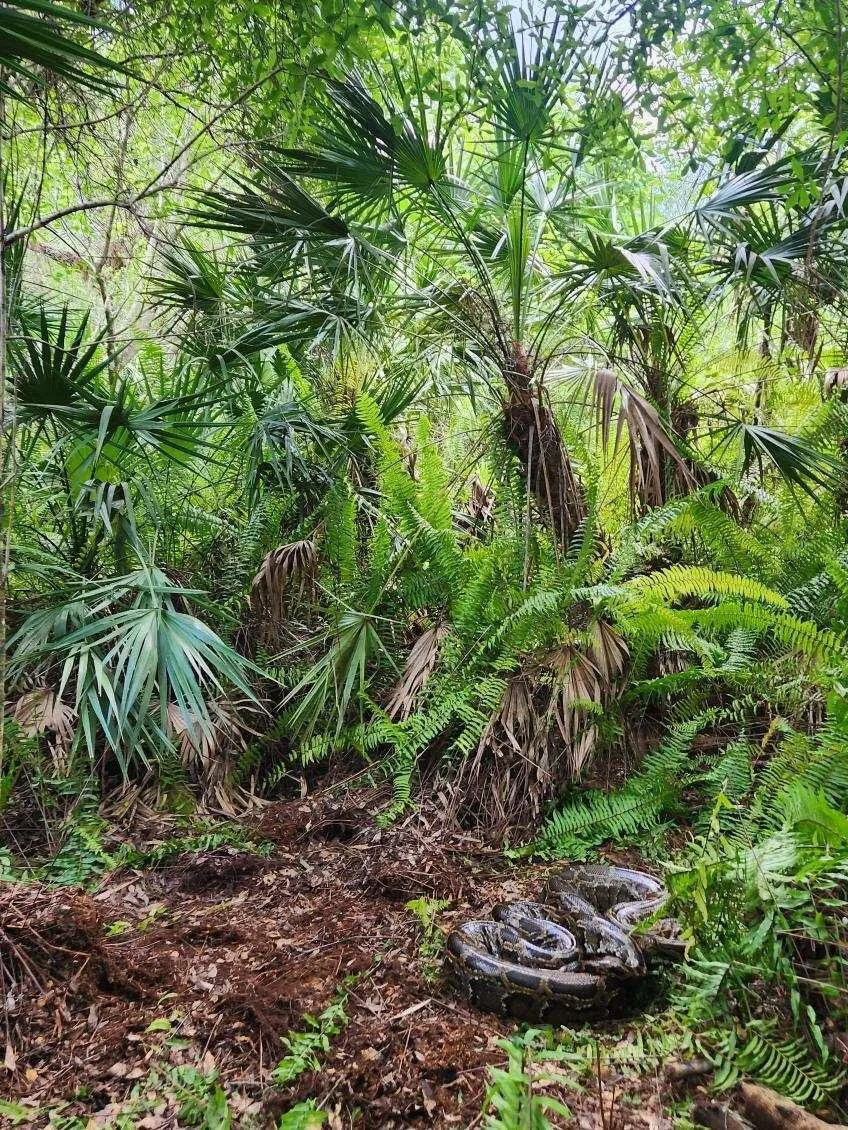
A Burmese python (Python bivittatus) concealed within dense South Florida vegetation. The species’ cryptic coloration and use of hardwood hammocks, palm understory, and sawgrass margins complicate detection and management efforts.
Photo: U.S. Geological Survey, invasive species monitoring program (Public Domain)
III. Ecological Impact on the Everglades
The ecological effects of the python invasion did not become immediately apparent. In early years, sightings were sporadic and population density uncertain.
It was systematic, long-term monitoring that revealed measurable patterns.
A. Mammal Population Declines
One of the most widely cited studies examining ecological impact comes from long-term nocturnal road surveys conducted in Everglades National Park. Dorcas et al. (2012) documented severe declines in mid-sized mammal observations following python proliferation:
Raccoons declined by approximately 99%
Opossums declined by approximately 99%
Bobcats showed significant reductions
Marsh rabbits were no longer detected in southern portions of the park
These species are not incidental components of the ecosystem. They function as seed dispersers, mesopredators, insect regulators, and prey for higher trophic levels. When mid-sized mammals decline at that magnitude, the structure of the food web shifts.
Importantly, similar declines were not observed in areas outside the python’s established core range, strengthening the spatial relationship between python presence and mammal reduction. (Dorcas et al., 2012)
While ecosystems are influenced by multiple stressors — including hydrological alteration and habitat fragmentation — the temporal and spatial correlation remains one of the strongest documented ecological signals of the invasion.

Despite their population decline, raccoons are resilient and still find areas to live thanks to management efforts.
Photo: Cody Meridith
B. Avian and Nest Predation Pressure
Burmese pythons are opportunistic generalists. Diet studies confirm predation on mammals and birds across size classes. (UF/IFAS–NPS, 2008) The Everglades is a landscape where bird reproductive success is closely tied to seasonal water levels and prey availability. Nesting outcomes fluctuate based on hydrological timing.
The addition of a large non-native predator introduces additional predation pressure into that already variable system. Isolating species-specific population impacts remains complex. However, python predation is now considered part of the broader ecological equation affecting wetland bird communities. (Guzy et al., 2023)
C. Interactions With Native Predators
The python does not replace existing predators. It adds competition. American alligators and Burmese pythons overlap in habitat and occasionally engage in direct conflict. (Willson et al., 2017) More ecologically significant is prey redistribution.
Florida panthers, bobcats, and coyotes rely on prey species that have declined in areas with high python density. When portions of the prey base shift, predator movement, diet, and distribution can shift as well. Ecosystems rarely respond in linear fashion. Hydrology, development pressure, climate variability, and invasive species interact simultaneously.
The python’s impact is not explosive. It is incremental.
Measured in fewer raccoons observed on survey routes.
Fewer rabbits along prairie margins.
Fewer small mammals moving through sawgrass at dusk.
Over time, incremental changes reshape system structure.
D. Local Observations and Deer Dynamics
For many South Florida residents, ecological change is not abstract. Hunters have reported noticeable deer declines over the past two decades. In many local discussions that I have had, these declines are often attributed to the recovery of the Florida panther. Many feel that the combination both panther and python populations are to blame.
Panther genetic restoration efforts in 1995 improved genetic diversity and population viability. (FWC; Johnson et al., 2010)
At the same time, documented declines in mid-sized mammals suggest broader shifts in prey communities. (Dorcas et al., 2012)
Deer population trends are influenced by:
Habitat quality
Hydrology
Hunting pressure
Disease
Predator-prey dynamics
Assigning a single cause oversimplifies a system shaped by overlapping forces. Recognizing local observation while maintaining scientific nuance strengthens conservation dialogue rather than polarizing it.
IV. What Removal Efforts Actually Involve
Public discourse often assumes eradication as the goal. In practice, management focuses on suppression. If we are being honest with ourselves, eradication isn’t even possible at this stage.
Organized Removal Programs
The Florida Fish and Wildlife Conservation Commission operates the Python Action Team Removing Invasive Constrictors (PATRIC) program, compensating trained individuals for targeted removals. (FWC)
Each removal contributes biological data — size, sex, reproductive status, and location. Over time, those data points build a clearer picture of how the population moves and breeds.
Radio telemetry has become one of the most strategic tools in that effort. Tagged males — often called “Judas snakes” — are tracked during breeding season. When they aggregate with females, researchers can locate and remove reproductive individuals that would otherwise remain hidden. (Smith et al., 2016)
On paper, the strategy sounds straightforward.
In practice, detection rates remain low. Dense vegetation swallows radio signals. Limestone bedrock is riddled with solution holes and underground voids where pythons can disappear. Hours can pass moving slowly through sawgrass with nothing but static in your receiver.
When a signal finally strengthens, it rarely means an easy approach. The landscape is thick. Visibility is limited. Heat and humidity are constant. Biting insects do not take breaks.
USGS documented a record female containing 87 eggs located through telemetry. (USGS, 2012) Those moments matter. But they are the result of long, patient effort — not dramatic breakthroughs.
Field tracking is physically demanding, methodical work. It is less spectacle and more persistence.
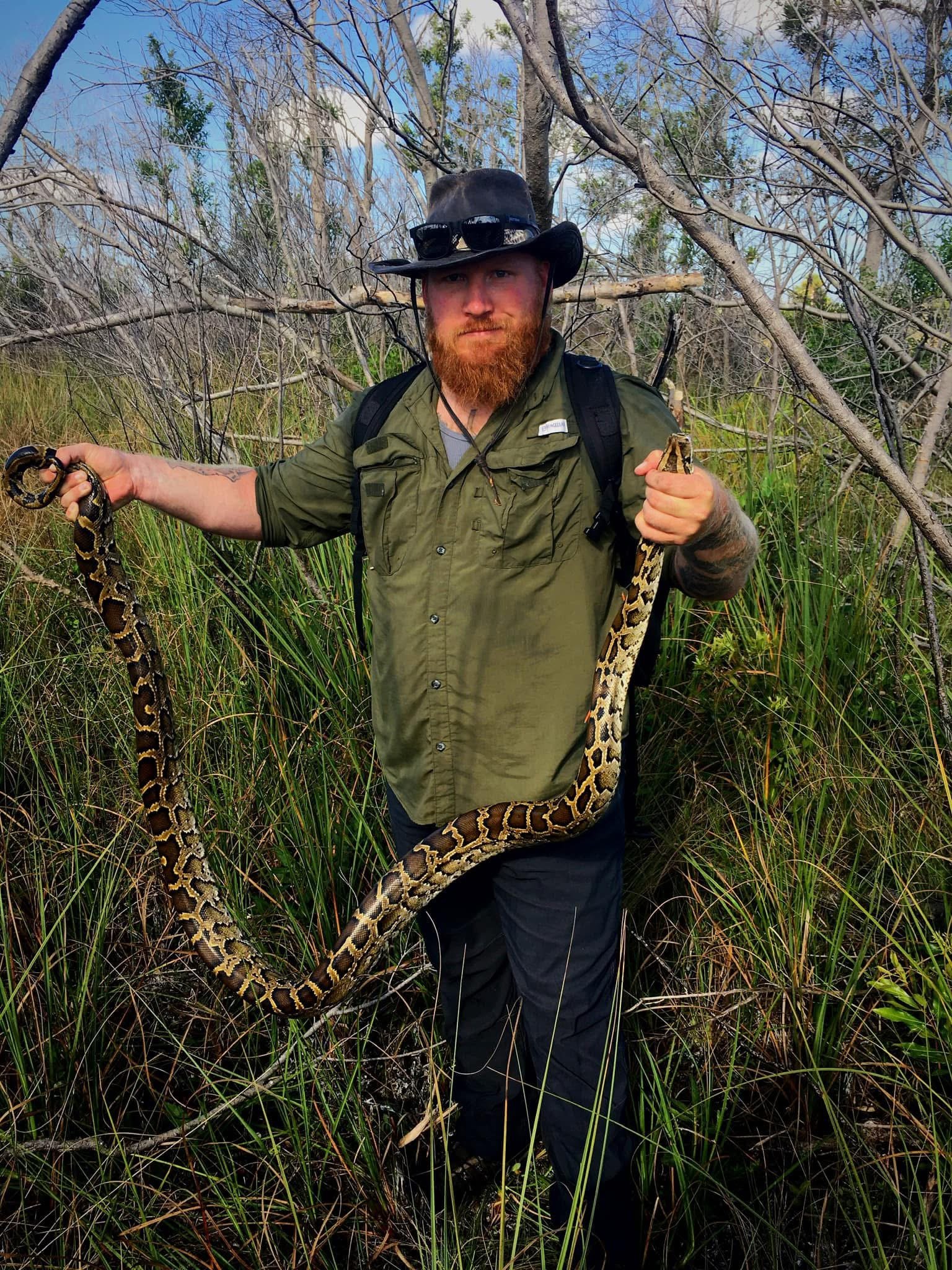
Researcher holding a radio-tagged Burmese python used in telemetry tracking (“Judas snake”) efforts.
Photo: Cody Meridith
Suppression as Long-Term Strategy
Eradication across the entire Greater Everglades is not considered realistic. Female reproductive capacity is high, with large clutch sizes documented. (Reed & Rodda, 2009)
Management therefore prioritizes:
Density reduction in sensitive habitats
Range expansion limitation
Long-term suppression
This is sustained ecological management, not a short-term campaign.
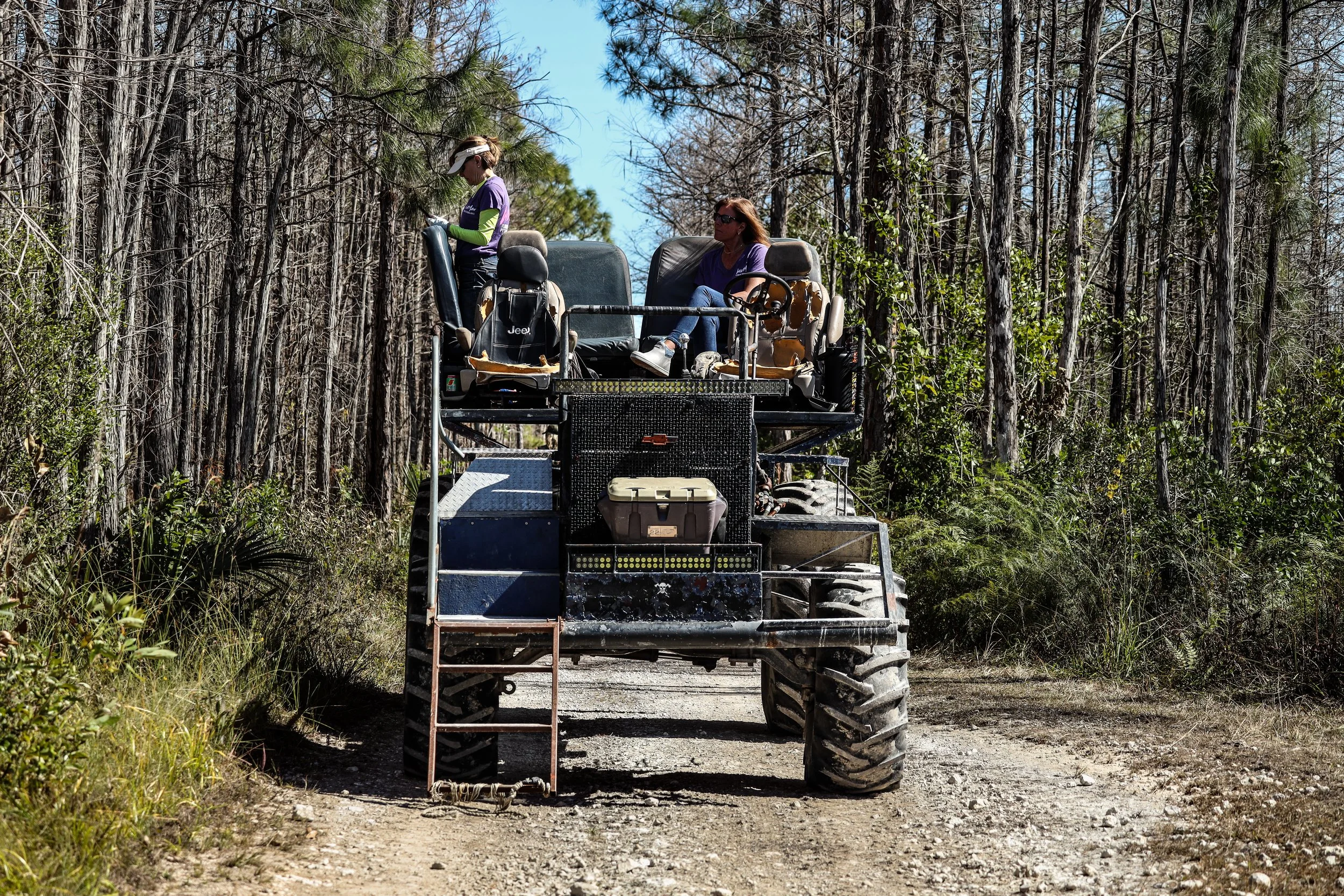
Removal efforts in South Florida are ongoing and data-driven, focused on suppression rather than total eradication.
Photo: Cody Meridith
V. Broader Context: Invasive Species and Responsibility
Invasive alien species are recognized globally as one of the major direct drivers of biodiversity loss. (IPBES; UNEP) The Burmese python’s establishment in the Everglades reflects broader patterns of human-mediated species movement. Once established in suitable habitat, ecological consequences unfold gradually. Prevention, regulation, education, and sustained funding are essential components of invasive species management.
The lesson extends beyond a single species.
VI. The Everglades Remains Worth Protecting
The Everglades has endured drainage, development, altered hydrology, and restoration efforts.
The python is now part of that landscape — not as a native component, but as a consequence of human systems intersecting with ecological systems. Its presence has altered food webs and reshaped management priorities.
Yet the Everglades remains dynamic and resilient. The python invasion does not define it. It clarifies the responsibility required to protect it. The work continues.
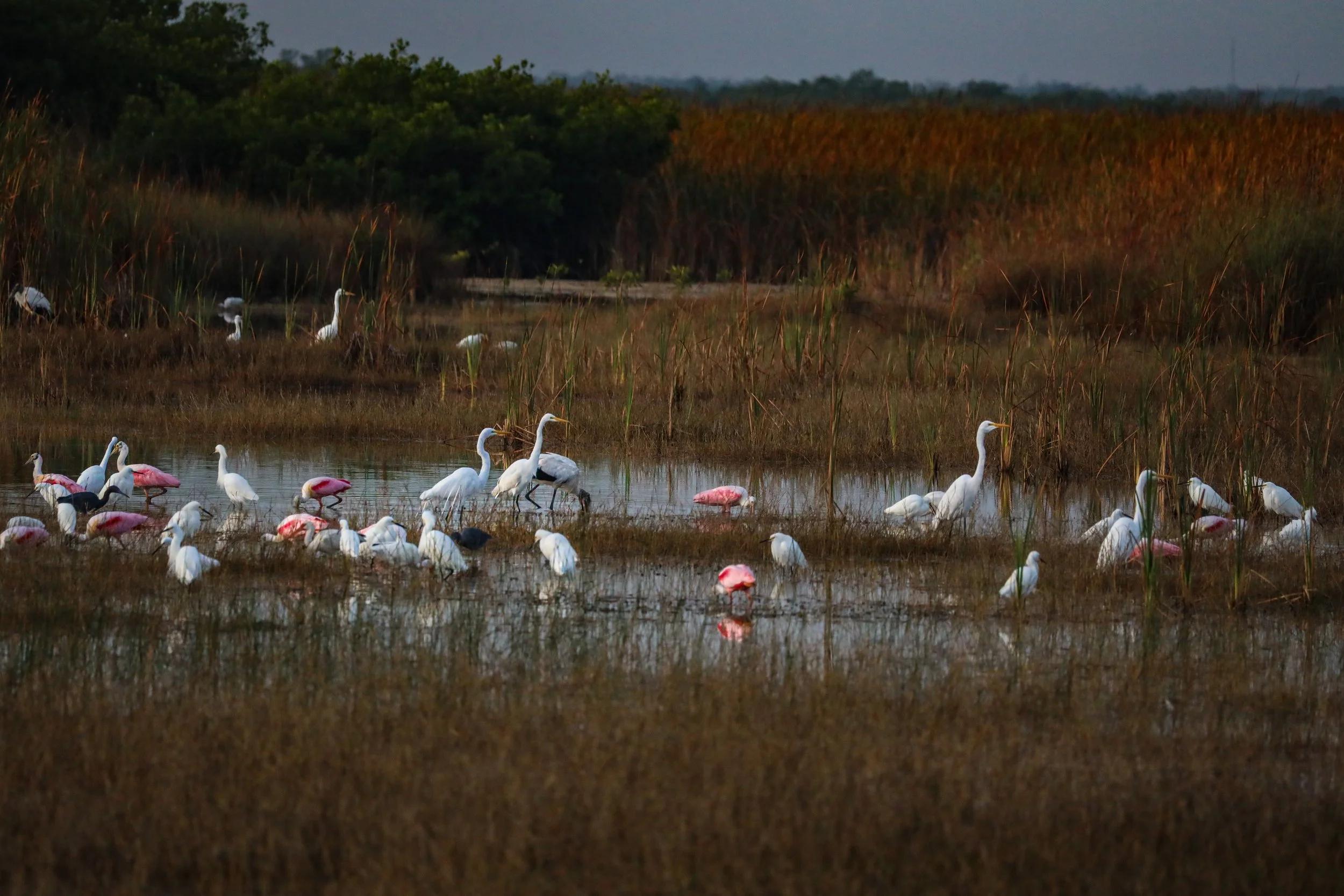
The Everglades remains a living system — dynamic, resilient, and worth protecting.
Photo: Cody Meridith
References
Dorcas, M. E., et al. (2012). Severe mammal declines coincide with proliferation of invasive Burmese pythons in Everglades National Park. Proceedings of the National Academy of Sciences.
FWC (Florida Fish and Wildlife Conservation Commission). Python Action Team Removing Invasive Constrictors (PATRIC).
FWC. Florida Panther Genetics Program.
Guzy, J. C., et al. (2023). Ecological impacts and management of invasive Burmese pythons in Florida. NeoBiota.
IPBES (2019). Global Assessment Report on Biodiversity and Ecosystem Services.
Johnson, W. E., et al. (2010). Genetic restoration of the Florida panther. Science.
Nafus, M. G., et al. (2020). Estimating detection probability of invasive Burmese pythons. Journal of Herpetology.
Reed, R. N., & Rodda, G. H. (2009). Giant constrictors: Biological and management profiles. USGS Open-File Report 2009–1202.
Smith, B. J., et al. (2016). Radio-tagged pythons reveal conspecific locations during breeding season. USGS.
UF/IFAS–NPS (2008). Burmese Pythons in South Florida factsheet.
USGS (2012). Record-breaking invasive Burmese python.
USGS (2024). Invasive Burmese python research overview.